Advanced Engineering Consultancy & Testing Laboratory
Centre for Advanced Testing, Inspection and Engineering Solutions
Advanced Engineering Consultancy & Testing Laboratory
Centre for Advanced Testing, Inspection and Engineering Solutions
Industrial decarbonisation requires credible asset data, materials insight, and inspection planning to reduce emissions without compromising reliability.
A low-carbon project can fail long before commissioning if it is based on assumptions about materials, operating conditions, or remaining asset life. Industrial decarbonisation is therefore not only an energy strategy. For asset-intensive organizations, it is an engineering assurance challenge that requires defensible data on equipment condition, material compatibility, process performance, and compliance risk.
Electrification, alternative fuels, carbon capture, and efficiency upgrades all change the duty placed on industrial assets. Temperatures, pressures, fluid chemistry, thermal cycling, and load profiles may no longer resemble historic service conditions. A credible program must establish whether the existing plant can operate safely under those changes, where upgrades are required, and how performance will be verified over time.
Many decarbonisation initiatives target the most visible emissions sources: combustion equipment, purchased electricity, transport fleets, and process heat. These are necessary targets, but the engineering consequences extend further. Replacing a natural gas-fired heat source with electric heating may introduce different thermal gradients and cycling rates. Using hydrogen or hydrogen blends can alter degradation mechanisms in pipelines, valves, pressure equipment, and welds. Carbon capture systems can create new corrosion environments through wet carbon dioxide, impurities, and changes in process chemistry.
The asset question is not simply whether equipment is currently fit for service. It is whether it remains fit for service under a new operating envelope. That distinction matters for plants with long-lived boilers, pressure vessels, tanks, conveyors, structural steel, piping systems, marine infrastructure, and process equipment.
There is no universal testing package for every transition project. The correct scope depends on the asset’s age, material specification, fabrication history, operating duty, inspection record, regulatory obligations, and consequence of failure. However, projects that start with verified baseline information are better positioned to control cost, schedule, and safety risk.
Before committing to a technology pathway, organizations need a practical understanding of their asset population. Engineering drawings and maintenance records provide useful context, but they may not reflect undocumented repairs, material substitutions, service degradation, or modifications made over decades of operation.
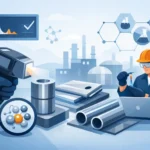
A baseline assessment commonly combines document review with targeted inspection and testing. Positive material identification can confirm alloy grades in critical piping, fittings, valves, and fabricated components. Mechanical and metallurgical testing can establish material properties, microstructure, hardness, weld quality, and evidence of degradation. Chemical analysis may be required where fluid composition, contamination, or deposits influence corrosion and process performance.
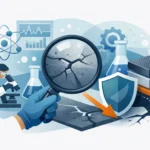
For aging or high-consequence equipment, non-destructive examination and condition assessment help locate cracking, wall loss, weld discontinuities, coating failures, or localized deterioration without unnecessary disruption. Where a failure has occurred or degradation is unclear, advanced techniques such as scanning electron microscopy with energy-dispersive spectroscopy, X-ray diffraction, and Fourier-transform infrared analysis can identify the mechanism rather than merely describe the damage.
This work produces more than a condition report. It provides the technical basis for decisions about reuse, repair, derating, replacement, inspection intervals, and project sequencing.
Alternative energy carriers and lower-carbon process routes can introduce conditions that were not considered in the original design. Hydrogen service may raise concerns about embrittlement, permeation, and weld performance. Carbon dioxide transport and capture infrastructure can be vulnerable to corrosion when water and contaminants are present. Biofuels, waste-derived fuels, and recycled feedstocks can vary in composition and may affect linings, elastomers, coatings, and metallic components differently from conventional fuels.
Compatibility assessments should consider the complete system, not only the parent metal. Weld metal, heat-affected zones, gaskets, sealants, protective coatings, repair materials, and bolting can each become limiting elements. Failure analysis and laboratory testing are particularly valuable where field evidence suggests a new or accelerated damage mechanism.
Decarbonisation capital programs are often assessed through energy savings, emissions reduction, and installation cost. Asset integrity data should carry equal weight. A lower-cost technology option can become expensive if it requires widespread material upgrades, unplanned shutdowns, accelerated inspection, or premature replacement of equipment.
Testing supports more realistic project economics in several ways. It can identify assets suitable for continued service, distinguish isolated defects from systemic degradation, and verify whether repair is technically justified. It can also help prioritize investment toward components that genuinely constrain a transition rather than replacing equipment on age alone.
For example, a plant considering higher operating temperatures for an electrified process may need to confirm the creep resistance and thermal fatigue condition of existing components. A water utility evaluating changes to chemical dosing or treatment processes may need corrosion testing and coating assessment before modifying tanks or pipework. A manufacturer introducing recycled feedstock may require chemical characterization and materials analysis to understand the effect of contaminants on process equipment and product quality.
The objective is not to test everything. It is to apply the right methods at the points where uncertainty could materially affect safety, compliance, availability, or lifecycle cost.
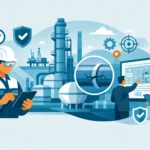
New low-carbon infrastructure should be verified through each stage of delivery. Material traceability, weld procedure qualification, welder qualification, coating inspection, and dimensional verification are not administrative extras. They are controls that protect the intended design life of an asset operating in demanding service.
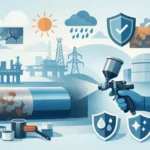
Fabrication quality is especially relevant where projects involve new pressure systems, modified piping, structural supports, storage vessels, or corrosion protection systems. Incorrect material selection, poor welding practice, inadequate surface preparation, or coating defects may not be immediately visible after installation. The consequences can emerge years later as leaks, cracking, corrosion, unplanned outages, and regulatory exposure.
Independent inspection provides an additional level of assurance during manufacture, construction, repair, and commissioning. ISO 17020 inspection services and ISO 17025-accredited laboratory testing provide confidence that observations, measurements, and results are generated through controlled and traceable processes. For owners, contractors, and quality managers, this creates a clearer evidentiary trail when demonstrating conformance to specifications, codes, and project requirements.
AECTL supports this approach through integrated materials testing, inspection, corrosion assessment, welding and coating services, and engineering consultancy. Combining these disciplines can reduce handoffs between providers and help project teams interpret findings in the context of real operating conditions.
Commissioning does not close the engineering case for industrial decarbonisation. It begins a new period of operational learning. Early monitoring is valuable because actual duty can differ from design assumptions, particularly when equipment is integrated with variable renewable power, new feedstocks, intermittent production schedules, or evolving process controls.
Inspection plans should be updated to reflect the anticipated damage mechanisms and consequence of failure under the new operating regime. This may include corrosion monitoring, targeted thickness measurements, coating condition surveys, periodic material verification, leak investigation, or review of weld and repair performance. Trend data is more useful than isolated readings because it reveals whether degradation is stable, accelerating, or localized.
Asset owners should also maintain clear change records. If a process condition, chemical composition, operating pressure, or maintenance practice changes, the integrity basis may need review. This discipline is particularly valuable for facilities moving through staged decarbonisation programs, where the plant may operate in several transitional configurations before reaching its intended end state.
The strongest decarbonisation projects treat emissions reduction and asset reliability as connected objectives. They do not assume that newer technology automatically reduces engineering risk, nor do they allow uncertainty to delay action indefinitely. Instead, they identify the decisions that require evidence, apply targeted testing and inspection, and use the results to design controls proportionate to the risk.
For project managers, this means bringing materials and integrity specialists into feasibility work rather than after procurement. For quality teams, it means defining verification requirements before fabrication begins. For asset owners, it means using condition data to make defensible choices about life extension, upgrade, replacement, and monitoring.
The most valuable next step is often a focused technical review of the assets most affected by the proposed change. Establish what is known, identify what must be verified, and let evidence determine where investment and assurance effort will have the greatest effect.